
Car Insurance Costs — Wisconsin
Free to compare
What Drives Multi-Vehicle Premium Structure in Wisconsin
You added a third car to your Wisconsin policy and the premium jumped more than you expected. The increase wasn't just the cost of insuring one more vehicle — your entire policy was re-rated. That's the structural reality of multi-vehicle coverage: carriers price the household as a unit, not as a sum of individual cars.
Wisconsin requires $25,000 bodily injury per person, $50,000 bodily injury per accident, and $10,000 property damage liability on every registered vehicle. When you add a vehicle mid-term, the carrier recalculates risk across every car on the policy, adjusting for the new vehicle's make, model, garaging location, and how it changes the household's overall exposure. The multi-car discount applies to the recalculated total, not to the added vehicle in isolation.
“Adding a vehicle mid-term re-rates your entire policy, not just the new car.”

See What Wisconsin Drivers Pay for the Coverage They Need
Get My Wisconsin Car Insurance Quote$1,062.98
Wisconsin Average Annual Auto Expenditure Per Vehicle
This 2023 figure represents the average annual auto insurance expenditure per insured vehicle in Wisconsin, providing a benchmark for households structuring coverage across multiple cars. Individual household totals vary by vehicle count, driver ages, coverage selections, and garaging location.
NAIC Auto Insurance Database Report 2023
How the Multi-Car Discount Works Across Wisconsin Carriers
The multi-car discount requires every vehicle to sit on the same policy. Most Wisconsin carriers also require every vehicle to share the same garaging address. A car titled to a household member but garaged elsewhere — a college student's car at a campus address, a work vehicle parked at a job site — may not qualify for the same-policy discount even if the household owns it.
Wisconsin carriers writing multi-vehicle policies include State Farm, American Family, Progressive, GEICO, Allstate, Farmers, USAA, Travelers, and Nationwide. Each carrier structures the discount differently: some apply a percentage reduction to each vehicle after the first, others reduce the base rate before calculating per-vehicle premiums. A smaller discount on a lower base rate can produce a lower total than a larger discount on a higher base.
When you combine two existing policies — after marriage, when a household member moves in, or when consolidating coverage — the carrier re-rates both policies as one. The combined premium is not the sum of the two prior premiums minus a discount. It's a new household rating that accounts for every driver, every vehicle, and the shared risk profile.

Adding a vehicle mid-term re-rates your entire policy, not just the new car. The multi-car discount applies to the recalculated total.



Structuring Coverage for Rarely-Driven Vehicles in a Multi-Car Household
A household with four vehicles but only two regular drivers faces a coverage decision: insure every car with full coverage, or drop collision and comprehensive on the rarely-driven vehicles. Wisconsin requires liability on every registered vehicle, but collision and comprehensive are optional. A classic car, a project vehicle, or a backup car driven fewer than 1,000 miles per year can stay on the policy with liability-only coverage.
Dropping collision and comprehensive removes the protection for damage to that vehicle, but it keeps the car on the policy and preserves the multi-car discount across all vehicles. The alternative — removing the rarely-driven car from the policy entirely — can raise the per-vehicle cost on the remaining cars because the discount shrinks as vehicle count drops.
Some Wisconsin carriers offer usage-based or low-mileage programs that reduce premiums for infrequently driven vehicles without requiring you to drop coverage. Progressive's Snapshot, State Farm's Drive Safe & Save, and Allstate's Milewise track mileage and adjust rates accordingly. If your household drives one or two cars significantly less than the others, a usage-based program can lower the total policy cost while keeping every vehicle fully covered.
15.6%
Wisconsin Uninsured Motorist Rate
More than one in seven Wisconsin drivers carries no insurance. Uninsured motorist coverage protects your household when an at-fault driver cannot pay for damage to your vehicles or injuries to your passengers. Wisconsin requires uninsured motorist coverage on every policy.
Insurance Information Institute, 2023
When Combining Policies After Marriage or a Household Change
Two people with separate auto policies who marry or move in together can combine their policies into one multi-vehicle household policy. The combined premium is not the sum of the two prior premiums. The carrier re-rates the household as a single unit: every driver, every vehicle, shared garaging address, and combined driving history.
If one person has a clean record and the other has a recent violation or claim, the combined policy will reflect both. Wisconsin carriers rate every driver on the policy against every vehicle, assigning the highest-risk driver to the highest-risk vehicle for rating purposes. A household with one high-risk driver and three vehicles will see that driver's risk factored into the premium for all three cars, even if that driver primarily uses only one.
Some couples keep separate policies when one person's driving record would significantly raise the other's premium. Wisconsin allows this, but it eliminates the multi-car discount. The decision depends on whether the discount on a combined policy offsets the rating impact of the higher-risk driver. Compare both structures — combined versus separate — with actual quotes before choosing.
Compare Wisconsin Carriers Writing Multi-Vehicle Policies
Wisconsin carriers structure multi-vehicle discounts differently. State Farm and American Family dominate the Wisconsin market and write policies for households with three or more vehicles. Progressive, GEICO, and Allstate offer online quoting tools that show multi-vehicle pricing immediately. USAA serves military families and typically offers competitive multi-car rates, but eligibility is restricted to service members, veterans, and their families.
When comparing carriers, request quotes for the exact household structure you're insuring: every driver's age and driving record, every vehicle's make and model, and the shared garaging address. A quote for two vehicles will not scale linearly to three or four. The multi-car discount applies to the total household rating, and that rating changes as vehicle count increases. Get quotes that reflect your actual household, not a simplified version.
Wisconsin requires proof of insurance at registration and during traffic stops. Every vehicle on your policy must meet the state's $25,000/$50,000/$10,000 liability minimums and carry uninsured motorist coverage. Carriers issue one proof-of-insurance card per policy, covering all vehicles. Keep a copy in every car you drive.
What Happens When You Add a Vehicle to an Existing Wisconsin Policy
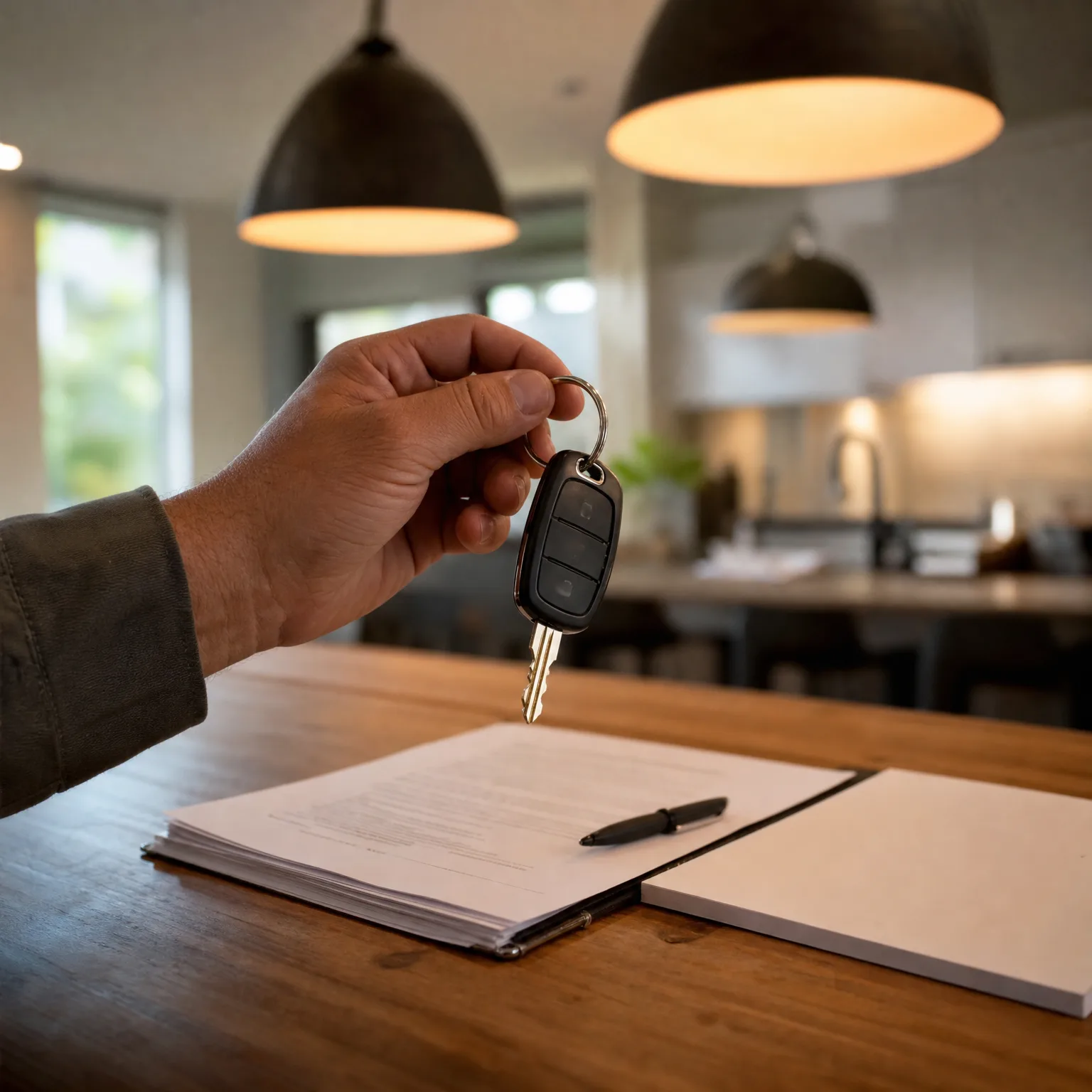
When you buy a car, contact your carrier within the grace period and provide the VIN, make, model, year, and garaging address. The carrier will re-rate your policy effective the purchase date. If the new vehicle is more expensive to insure than your current cars — a newer model, higher theft risk, or costlier to repair — the premium increase will exceed the per-vehicle average you've been paying.
If you miss the reporting window and file a claim on the unreported vehicle, the carrier can deny the claim. Wisconsin does not mandate coverage for unreported vehicles beyond the grace period. The multi-car discount applies only to vehicles the carrier knows about and has rated into the policy. An unreported car is uninsured, even if you're paying for multi-vehicle coverage on your other cars.
Get Your Free Quote
Get My Wisconsin Car Insurance QuoteFrequently Asked Questions
Does the multi-car discount apply if my vehicles are garaged at different addresses in Wisconsin?
Most Wisconsin carriers require every vehicle on the policy to share the same garaging address to qualify for the multi-car discount. A car garaged at a different address — a college student's vehicle at a campus location, a work vehicle parked at a job site — typically does not qualify, even if the household owns it and it's titled to a policy member.
How much does adding a third car to my Wisconsin policy increase my premium?
The increase depends on the new vehicle's make, model, year, and how it changes your household's overall risk profile. Adding a vehicle re-rates your entire policy, not just the new car. The multi-car discount applies to the recalculated total. A newer, higher-value vehicle will increase the premium more than an older, lower-value one.
Can I keep separate policies after marriage in Wisconsin?
Yes. Wisconsin allows married couples to maintain separate auto policies. This eliminates the multi-car discount but may save money if one person's driving record would significantly raise the other's premium. Compare quotes for both structures — combined and separate — before deciding.
What happens if I don't report a newly purchased vehicle to my Wisconsin carrier within the grace period?
If you miss the reporting window and file a claim on the unreported vehicle, the carrier can deny the claim. Wisconsin does not mandate coverage for unreported vehicles beyond the grace period, which is typically 14 to 30 days. An unreported car is uninsured, even if you're paying for multi-vehicle coverage on your other cars.
Should I drop collision and comprehensive on a rarely-driven car in my Wisconsin multi-car policy?
Dropping collision and comprehensive removes protection for damage to that vehicle but keeps it on the policy with liability-only coverage and preserves the multi-car discount. Removing the car entirely can raise the per-vehicle cost on your remaining cars because the discount shrinks as vehicle count drops. Compare the premium difference before deciding.
Do all Wisconsin carriers offer the same multi-car discount?
No. Each carrier structures the multi-car discount differently. Some apply a percentage reduction to each vehicle after the first; others reduce the base rate before calculating per-vehicle premiums. A smaller discount on a lower base rate can produce a lower total than a larger discount on a higher base. Compare quotes from multiple carriers for your exact household.